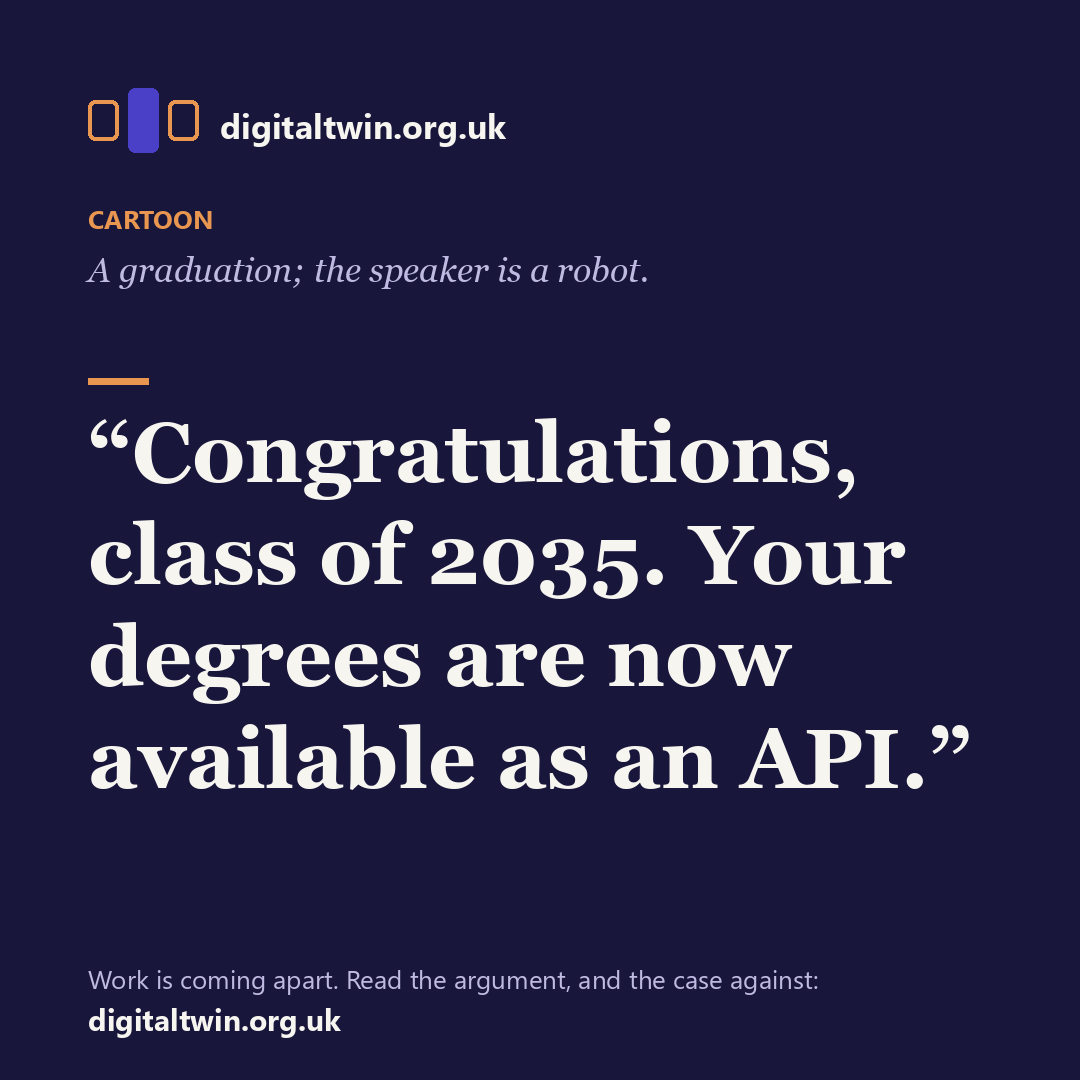
The joke
Graduation day, and the speaker congratulates the class on knowledge a machine can now hand out on request. Caps in the air anyway.
The irony
The joke isn't really about degrees. It's about what a qualification signals. If what you know can be called up on demand, knowing it stops being the scarce part. What stays scarce is judgement, a record of doing the work well, and being the person who answers for the result.
So what?
Working Paper 1 argues that capabilities will advertise themselves, searchable by what goes in and what comes out. The AI industry's registries already describe an agent's skills and inputs. What they don't carry is performance evidence, failures, or a person who answers. That may be exactly where people still stand out. The case against is about the class of 2035 itself: if machines do the small tasks, where do beginners learn the trade?
If what you learned could be bought as a service, what would make you worth hiring? Tell us in the comments, or respond to the paper.
Read more
Respond
Add your view.
Academics, practitioners, sceptics: tell us where this is right or wrong. Mark reads every response, and the best are published here with your name and role, with our reply.