¿Prefiere leer en español? Leer en español →
Traducción hecha con IA: algunos términos pueden no traducirse bien y puede haber errores.
Research · how work will be put together
Work is coming apart.
After 25 years of looking inside organisations, we think the way work is organised is about to change: from hierarchies of roles to atomic capabilities, small units that each do one specialist thing, done by a person, software, AI or a mix.
The building block Proposal
Every piece of work has the same shape.
Something comes in. Something is done to it. Something goes out. Who or what does the middle part matters less than whether it is clear, measurable and owned.
There is no smallest size: “find prospects” is made of smaller capabilities, which are made of smaller ones still, and every piece can be reused.
The argument, in four parts
From org charts to blocks of work.
Work is coming apart
From jobs and job titles to atomic capabilities: each takes an input, transforms it and hands on an output, with or without AI.
2Capabilities become entities
Each capability advertises itself: what it takes, what it makes, how fast, at what rate. It may serve one organisation, several, or join others to form something bigger.
3You need a twin first
No organisation can make that move safely without seeing itself: a live copy built from its own systems, to experiment on before changing anything.
4We test it in public
Coming soon. A company that runs itself, built step by step on video: finding the opportunity, taking the work apart, automating it, failures included.
A working idea, not a proven theory. Every claim is labelled as an observation, a proposal, a hypothesis or a counterargument, and we publish the case against alongside our own.
Preview
The Periodic Table of Work
Every capability as an Element: what goes in, what it does, what comes out, who answers for it. Search them, bond them into Molecules, or draw your own Element card.
Latest
New on the site.
Is your human not cutting the mustard? Here's how to deal with it.
Satire. A friendly guide for AI managers with an underperforming person on the team. If it makes you laugh and then wince, it has done its job.
Paper · 28 Oct 2026Work is coming apart
From roles to capabilities, and why every organisation will need a twin of itself first
Paper · 28 Oct 2026The capability as an entity
Why work will be organised around units that take something in, transform it and hand it on, and how those units will advertise themselves
Read and follow
Papers, news and the case against.
The flagship paper
Work is coming apart: from roles to capabilities, and why every organisation needs a twin of itself first. Working paper 1 is out too.
Weekly · freeThe Reaction
Three things a week on how work is changing, from research and the news, checked by a person.
For researchersOpen questions
What we can’t answer yet, what would settle it, and how to work with us.
Join the conversation
Tell us where we’re wrong.
Academics, practitioners and sceptics: respond to the papers. Say who you are and why you’re commenting; the best responses are published with your name and role, alongside our reply.
Coming next
What happens to management?
Frederick Taylor took work apart into timed tasks in 1911, and people hated it. Is this the same thing again? The first in a series of conversations that will become a book: management, leadership, the org chart, careers, education and the new skills.
Who’s behind this
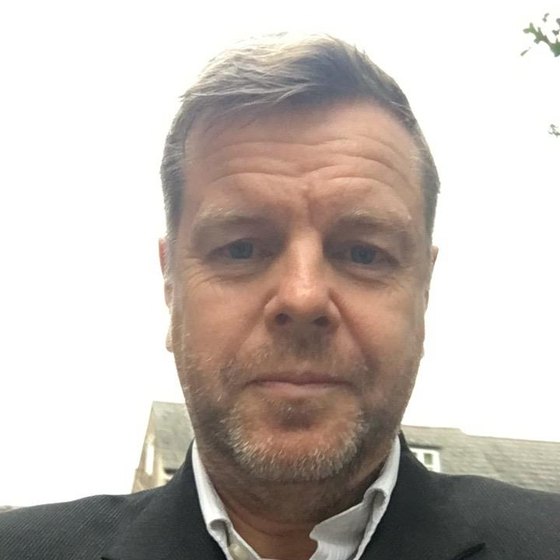
Mark Maynard
25 years inside organisations: police forces, NHS trusts, financial institutions and creative businesses. Trained in law, technology management and international business; works in English, Spanish and French. Mark is based in London. He is currently working in the UTC−5 time zone (US Eastern Standard Time).
The Reaction · weekly · free
Three things a week on how work is changing.
From research papers, standards and the news, on six areas we study: work coming apart, AI doing the work, registries, twins of organisations, new theories, and trust, law and data. Picked and checked by a person; each says why it matters and whether it supports or challenges our thinking.
Want to see your own organisation this way? The research is free. Mark is a founding member of Stratapault, a separate business. It builds a picture of your organisation from your own systems, read with you by an experienced operator. See how it works.